In
the past five years the institutional discussions surrounding climate
change have shifted noticeably from "net zero" goals (zero net carbon
emissions from target countries) to a more mercenary debate over carbon
taxation. The question on everyone's mind is this: Who gets the most
access to those delicious climate funds?
Who gets access to the cash is less important than who gets to manage the cash, but we'll get to that issue in a moment.
The
recent COP30 event held last week in Brazil was largely focused on
wealth redistribution with a lesser emphasis on carbon reductions.
Climate "financing" is the name of the game, and COP30 was largely a
squabble over which countries will get the most access to the various
carbon taxes and donations collected by global intermediaries. In fact,
the conference was largely considered a failure. From The Guardian:
"The
sticking point was fossil fuels. As science has told us for well over a
century, the carbon dioxide that burning them produces is heating up
the planet, now to dangerous levels. But in more than 30 years of
annual climate meetings, the need for that to halt has been mentioned
only once..."
"...Meanwhile,
developing countries desperately wanted to move forward on securing the
money that would help them cope with the already disastrous impacts of
extreme weather. By the early hours of Saturday, some delegates were
ready to walk out and force a collapse. “It was on the edge for us,”
said Ed Miliband, the UK energy minister. “I was prepared to walk
away.”"
The meaninglessness of the climate apparatus
becomes evident at these kinds of events; flush with thousands of
bureaucrats who serve no purpose, clamoring for money that is
essentially stolen in the name of a crisis that doesn't exist.
At
COP30, developing countries secured a tripling to $120bn of annual
finance to help them adapt to the impacts of extreme weather, but that
sum will not be delivered in full until 2035.
Developing
nations have already garnered billions in climate financing. India,
for example, receives around $30 billion annually in climate funding
which is meant to help third-world countries reduce their reliance on
oil and coal while developing "green tech." The dramatic inefficiency
of green energy aside, it's unlikely that much of this financing is
actually going into improving carbon emissions in India or anywhere
else.
The biggest beneficiaries are NGOs and Multilateral
Development Banks (MDBs) working closely with the World Bank. These
organizations collect the carbon funds and then redistribute that money
according to their own guidelines. Carbon taxes also represent a fresh
revenues source for various governments in the first-world, with some of
this money being transferred to intermediaries in the name of "Climate
Reparations."
The
woke vernacular of the climate agenda is no coincidence. Calls for
reparation, equity and "climate justice" reveal the globalist/socialist
roots of the global warming scam. Environmental groups were quick to
promote wealth redistribution in the name of imaginary climate crimes
and "colonialism". COP30 partially adopted this language by supporting the Belém Package - An agreement to integrate "equity" into climate financing decisions.

"There can be no true climate justice without reparatory justice," say climate activist groups in a letter sent to COP30.
"The
climate crisis did not arise recently — it is a continuation of
centuries of greenhouse emissions, extraction, dispossession, and racial
violence," the letter said, urging COP30 to address historical
injustices and the need for reparations as part of any negotiation on
climate.
The melding of woke activism and climate hysteria is part
of a larger progressive cultism that, until recently, has been
infecting global politics like a plague. There are obviously millions
of true believers when it comes to global warming doom, just as there
were millions of people that embraced the pandemic hysteria of covid.
However, the main thrust of climate governance is still mostly about
cold hard cash.
There is, of course, no science that supports
the claim of a causation relationship between man-made carbon emissions
and global warming. As we have noted many times in the past, climate
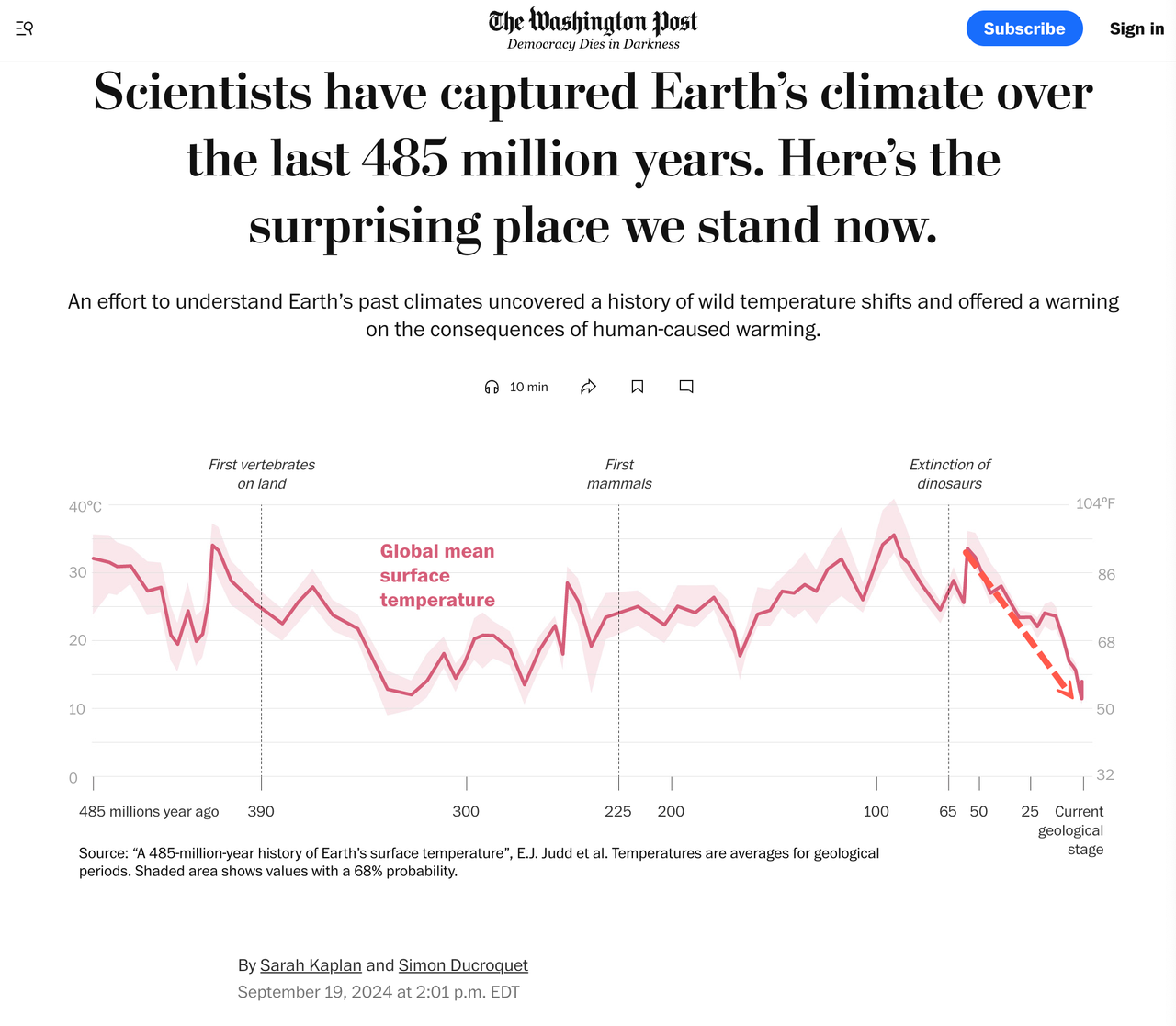
scientists rely on a tiny 140 year window of temperature data to defend
their claims. If we look at a much larger window of hundreds of
millions of years, the temperatures today are actually some of the
coldest ever recorded.
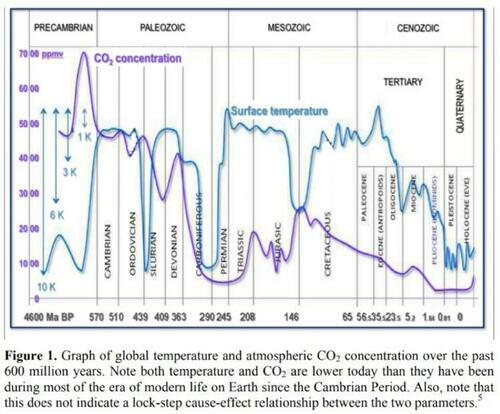
Furthermore,
when comparing atmospheric carbon content data over the same timeline,
it is undeniable that carbon emissions have no relation to planetary
temps. They simply do not match up.
Climate
scientists dishonestly ignore this data in preference of a 140 year
model; a meaningless timeline which offers no insight into why the Earth
warms or cools and when it might do so in the future. They insist on
the assumption that carbon "pollution" created by human industry is the
cause of current warming and then adjust their models to support this
assumption. It's not science, it's the opposite, but there's a lot of
money to be made by perpetuating the lie.