Showing posts with label War. Show all posts

Saturday, November 21, 2026

Col. Macgregor: Putin-Xi-Trump Talks IRRELEVANT + U.S. Will GO FOR BROKE in Iran (Video - 45mn)

   I believe Trump may finally have heard the voice of reason in Shenzhen and will declare victory in the Gulf before packing up and leave. Col Macgregor does not agree. He believes that Trump will be compelled to escalate. I wish he was wrong but I am afraid he may be right.  

   What is certain is that he is both knowledgeable and intelligent. You would expect such people to be heard in Washington. You would probably be misguided as what we have with the Trump administration is the best leader money can buy. Not exactly a tall order.   

Col. Macgregor: Putin-Xi-Trump Talks IRRELEVANT + U.S. Will GO FOR BROKE in Iran

Tuesday, November 17, 2026

Col. Macgregor Just Dropped a Warning "The Iran War is about start again and it'll be much worse." (Video - 20mn)

   Almost a year ago now, we warned that we were already in World War 3. Many people argued that this was an over-statement as the war was not global yet. 

   In the video below, Col Macgregor discusses the resumption of the war with Iran in the coming weeks as well as the high risk of the use of a nuclear tactical weapon. This is of course not guarantied but the only fact that the option is being discussed in Washington should alarm everybody to the highest degree.   

   Likewise, the Ukrainians today finally succeeded in bringing down the Kerch Bridge linking Russia with Crimea. This is a big deal since the bridge was symbolic, well defended and a key link for Crimea. This will mark an intensification of the conflict as it is likely that Russia will retaliate by cutting all the bridges over the Dnipro River in the coming days. 

   In such a context, what exactly can the Trump-Xi-Putin meeting in Shenzhen bring? A breakthrough? Very unlikely since we now know that practically, Trump is not in charge of the US foreign policy. A respite? Possible in Iran since although the US now has three carriers ready to strike in the Indian Ocean, it is unlikely that Trump will do so while he is in China. As for Ukraine or Yemen, conversely the fighting seems to be intensifying. 

   Overall, Europe is in no mood of "negotiating" with Russia which similarly may have decided that the conflict must end on the battlefield. Iran and the US are still not negotiating directly and conversely preparing to resume hostilities. As for its relations with China, the US seems to have decided to tighten the screw by ejecting Jensen Huang from his position at Nvidia and more importantly as a "bridge", exporting surreptitiously his advanced micro-chips to the middle kingdom. The tariff war between the two countries is still on hold until January 2027, but if the microchip embargo holds, it is likely that the US can say goodbye to most rare earths from China which will further slow down weapon production in the West. 

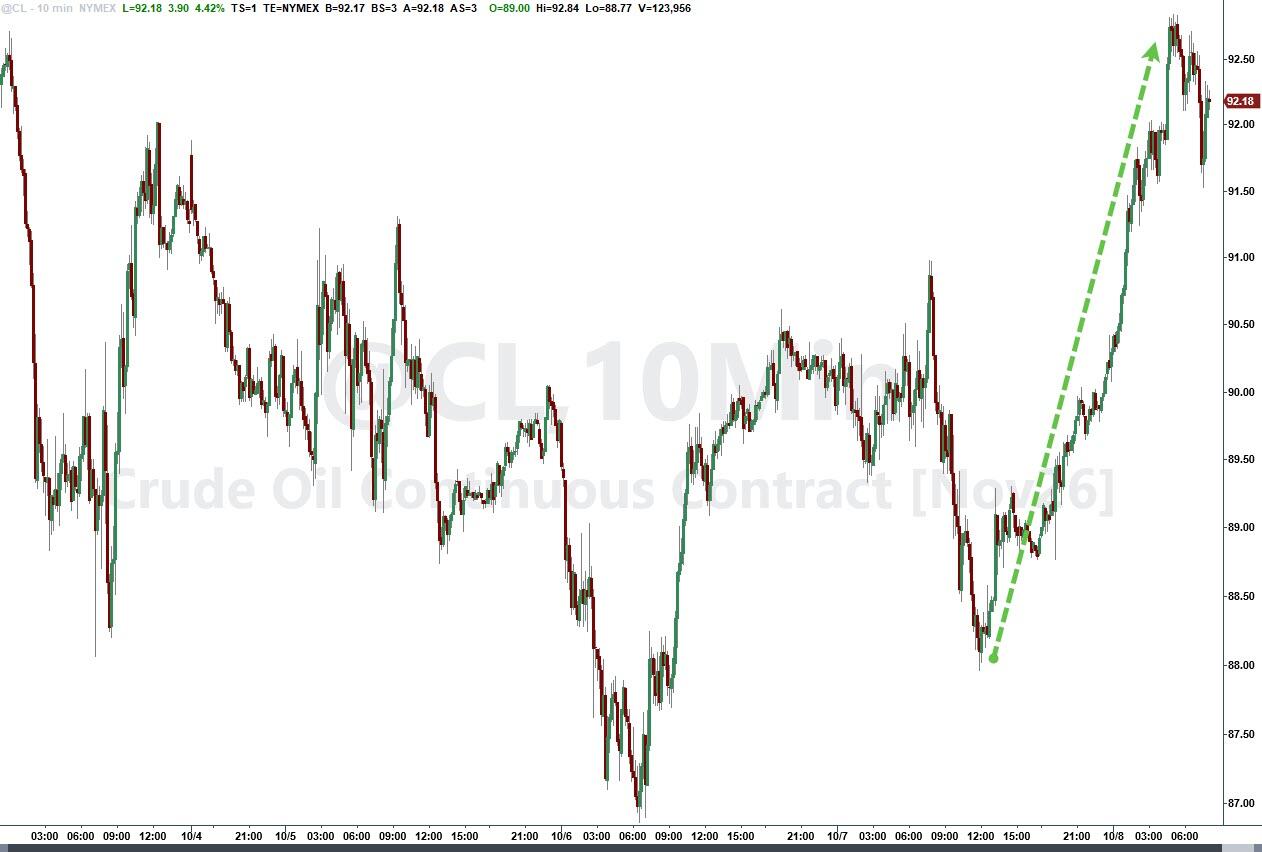
   The only good news is that the price of oil is not yet through the roof which means that the market are not yet worried, although this can change overnight. Likewise the global supply chain is still mostly working, which is not the case of the AI bubble which is in the process of imploding, slowly at first although this too may accelerate suddenly especially if credit conditions tighten further. 

   The end of 2026 was always going to be "agitated". We are only realizing now how ominous the black swans were with wars, economic and financial disruptions piling up fast, we will need very little for the world economy to slump into recession then inflationary (food and what you need) AND deflationary (everything else) depression. But this will only be appreciated in retrospect, in 2027. In the short term, the news will be overwhelmed by events and announcements. That's unfortunately what it feels like to be in the fog of war. Nothing is clear until much later when the damages can be assessed.  

   PS: As your government, like many others by now, has warned you: Don't forget to stock up of water, food and other necessities...      

Col. Macgregor Just Dropped a Warning "The Iran War is about start again and it'll be much worse."

   And here's Canadian Prepper about the destruction of the Kerch Bridge. More on the panic side as usual although there are aspects of the event he gets right. It certainly won't look good in Russia and doesn't help Trump's negotiating position. This shows that Trump doesn't control NATO either directly or indirectly so in the end, the whole Ukraine negotiation show is indeed little more than a show. In such a context, what exactly can Trump offer to make a deal with Putin? As for China, the relationship is more entangled but likewise, what's decided in Washington by Bessent among others, seems to be immune from Trump's tweets as fewer Nvidia CPU will now reach China. It might be a detail but the direction is obvious and not favorable to a grand bargain. So, will we get a worsening of international relations post summit? The odds for now seem rather high for an "anti-Yalta" with no agreement whatsoever. Then again, the real question is: What is Trump allowed to agree to? Not much seems to be the correct answer beyond what he craves for: The limelight and pictures with Xi Jinping, Putin and maybe Kim Jong Un.    

  ALERT! NATO Just Did the UNTHINKABLE. Crimean bridge DESTROYED. STOCK UP NOW.

Monday, November 2, 2026

What is the risk of a Nuclear War?

   As explained in the article below, almost ALL governments in the West are suddenly advising people to stock up. What do they know that we don't? 

   According to Tucker Carlson today, the Trump administration is seriously considering the use of a nuclear weapon against Pickaxe Mountain in Iran as a demonstration of force after the mid-term elections in the US even though they perfectly know that Iran does not have such weapon.  

   In the past the US army has resisted such pressure. Can they do it again? Could it be that the assessment in most countries is that we are on the edge and that such possibility exists?

   Crossing such a threshold would immediately create a before and after with a huge impact on the global supply chain and availability of oil in particular. 

   The market would crash seriously and the world economy would plunge very quickly in a deep depression.   

   What is the chance? The US is on the verge of losing its uni-polar dominance. Historically, such periods have always been times of great upheaval. This would massively accelerate the trend away from the US dollar and quickly reduce its use in international trade which anyway would shrink tremendously almost overnight. 

   Let's hope for the best and prepare for the worst. Here, in Japan, it is normal to be a "prepper" to some extent considering the risk of a major earthquake. Not so in Europe and in other developed countries which have not been through major events since the end of the second world war. 

   People who have been through the last general conflict are now in their 90s and therefore out of public office. This usually is when societies repeat past mistakes, the now famous Forth Turning generational theory of Strauss and Howe which we have discussed extensively recently. 

Prepare Now! Because That's What the Pentagon Is Doing YouTube Video by Chris Martenson on Peak Prosperity

Why Are So Many Countries Suddenly Warning Their Citizens To Prepare For An Emergency And Stockpile Essential Survival Supplies?

by Michael Snyder via The Economic Collapse,

What in the world is going on? Why are governments all over the planet suddenly encouraging their citizens to become preppers? Do they know something that they aren't telling us? If it was just one nation that was suddenly instructing people to stockpile food, water and other essential supplies, that wouldn't be a big deal. But it isn't just one nation. As you will see below, quite a long list of countries have simultaneously decided that now is the time for everyone to get prepared. So what has prompted this sudden sense of urgency?

For some reason, governments in Europe seem to have more of a sense of urgency than anyone else...

Governments in the UK, Sweden, Germany, Ireland, the Netherlands and France have encouraged households to keep food, water, medicines and other essentials available for emergencies.

I can't recall a time when so many European governments have been so concerned about making sure that their citizens are prepared for an emergency.

In the UK, the "Be Ready campaign" has been launched.

Every citizen is being encouraged to stockpile at least enough food and bottled water to last for 72 hours...

Every Briton is being urged to stock up to nine litres of bottled water and three days' worth of food in new government guidance designed to ensure that households can survive a weather, cyber or other serious emergency.

The Be Ready campaign is aimed at persuading people to stock up with supplies to last 72 hours, amid growing official concern about the impact of the climate crisis, technological dependency and hostile state threats.

Dan Jarvis, the security minister, said that "those who can follow this advice should follow this advice". It amounted to "simple steps to be ready for everyday emergencies" as part of a wider, community-oriented effort "to improve our resilience as a nation", he said.

So why has it suddenly become so important to do this?

The UK's defense secretary is saying that it is because we "live in a more dangerous and turbulent world"...

UK families are suddenly being told to stock up on emergency supplies - and to prepare for war.

Wes Streeting, the UK's defense secretary, went on a media blitz to push a new "Be Ready" campaign to boost Brits' preparedness for crises - which he said could range from floods and wildfires to terrorism and cyber attacks and ultimately even war.

"There's no sugarcoating the fact that we do live in a more dangerous and turbulent world," Streeting told BBC's "Newsnight."

"It's about saying to households across the country to be ready by just having some everyday essentials indoors should there be disruption from these sorts of events."

Yes, our world has certainly become more "dangerous" and more "turbulent", but I also get the impression that there is something that he isn't telling us.

In Sweden, citizens are being told that they may have to survive on their own for at least a week "in case of crisis or war"...

In Sweden, the country's civil defense guidance is warning households to be able to manage on their own for at least one week 'in case of crisis or war.'

'The state of the world has worsened drastically in recent years. War is being waged in our vicinity. Extreme weather events are becoming increasingly common. Terror threats, cyberattacks, and disinformation campaigns are being used to undermine and influence us,' the bulletin stated.

It is noteworthy that Swedish authorities are using the word "war", because a lot of people out there are convinced that military conflict is what has prompted all of this talk about preparing.

On social media, many are speculating that European governments are getting ready to go to war with Russia...

But if European governments are bracing for a military showdown with Russia, why is the government of Japan urging their citizens to stockpile food, water and other necessary supplies?...

Statements from Japan's Disaster Management Minister indicate that the government is preparing to issue a national "emergency request"⁠ on November 2, 2026. The request aims to urge all households across the country to stockpile essential survival supplies. The announcement is planned for the same day as the official launch of Japan's National Disaster Management Agency.

The new national agency will lead coordination efforts across the country regarding disaster planning, immediate emergency response, long-term recovery, and reconstruction.

I can't remember the Japanese government ever doing anything like this.

Just like in the UK, Japanese citizens are being instructed to have enough on hand to last for at least three days...

The emergency request lays down a self-sufficiency window of at least three days. However, the Disaster Management Minister Gishi Hosono emphasized that a one-week supply is recommended wherever possible.

Here in the United States, Project FORTRESS has just been initiated.

The goal is for the U.S. military to be able to keep fighting for at least 90 days if all civilian infrastructure goes down...

The Pentagon is preparing U.S. military bases to keep operating for at least 90 days without outside support as it prepares for the possibility of a major war that could cripple power grids, disrupt supply chains and threaten critical infrastructure on American soil.

The new requirement is part of FORTRESS, a broader military initiative aimed at ensuring American forces can continue fighting even if the civilian systems they depend on are disrupted, according to documents reviewed by Fox News Digital.

"We don't want to rely on standard civilian municipal infrastructure to run our national defense. We just simply can't. It's an intolerable risk," Pentagon chief spokesperson Sean Parnell told Fox News Digital.

What kind of scenario would "cripple power grids, disrupt supply chains and threaten critical infrastructure"?

I can only think of a few, and most of them involve military conflict.

So what do they think might happen?

Shortly after we learned about Project FORTRESS, former Deputy Director of the FBI Dan Bongino issued a very urgent warning...

The former Deputy Director of the FBI has issued an urgent warning to Americans as countries worldwide start stockpiling supplies for a potential crisis.

Dan Bongino, who left the bureau in January, said the public needs to do what the UK and European governments are telling citizens: Have a preparedness plan and at least three days of food and power ready.

'Have yourself an emergency radio, have yourself some batteries, get yourself some emergency food, get yourself a rain collection and water filtration, some filtration tablets,' he said on Monday.

'Get your stuff today. Please. Do it for your family,' Bongino added.

Even though he no longer works for the government, Bongino still has lots of contacts inside the government.

Has he been told something that would prompt him to literally beg his listeners to go out and buy emergency supplies?

Someone should really ask him that question.

And why is he urging us to have a "rain collection" system?

You wouldn't need to collect rain unless you were facing some sort of a long-term catastrophic emergency.

Without a doubt, everything that he is saying is wise advice.

But why has he suddenly developed such a sense of urgency?

I have a feeling that something big is coming.

Perhaps after the midterm elections in the United States we shall find out what it is.

Sunday, November 1, 2026

US Military DIGGING Graves! Iran War Plan EXPOSED! w/Scott Ritter (Video - 51mn)

   Almost forgot Scott Ritter and his energetic commenting. But some of his points are, well, to the point. 

   We are barreling into an energy crisis of epic proportion. Out of a daily oil consumption of a little more than 100 million barrels per day, the Hormuz Strait represented about 20% or 20 million barrels. Other producers around the world have increased production, compensating 10 million barrels. We have therefore been short 10 million barrels for over 6 months now. Depleting reserves has reduced the shortfall by a little less than half, so 5 million barrels and finally, the higher price of oil has reduced demand by the remaining 5 million barrels so that we now have an unstable equilibrium at a much lower level than last year. 

   This cannot go on much longer. Eventually demand and supply will have to find a new balance. Either the war ends and production rises again although this won't be instantaneous and may take one to two years or prices will rise to cancel the 5 million barrels current shortfall and we enter a deep recession. 

   Trump has said clearly that he won't back down and the Iranians as we discussed at length in earlier posts can lose all the battles, they won't lose the war as it is technically impossible for the US to assert military superiority in the Gulf in the long term. What the US army could not do in Vietnam with 500,000 soldiers 50 years ago, they won't do either against a much more sophisticated enemy in a much larger country.   

   This alone guaranties that we're heading into very choppy waters. Add to this the AI bubble which is about to burst in the US, the Chinese real estate debacle which is depressing demand in the country and the absurd European energy policies which are akin to slow suicide and it is not a stretch to predict that the coming months will be extremely tumultuous. What we are witnessing in Europe right now is little more than a foretaste of things to come.  

   Here's a scenario: Trump will lose the mid-term elections (80% probability). He will attack Iran. The price of oil will skyrocket to over 130 and maybe 150 dollars per barrel. Iran will strike back reducing production further. The political climate in Europe first, then in the rest of the world will get extremely nasty. Either oil demand will crash or rationing will be implemented. Eventually conflicts both internal and external will explode around the world as desperate governments try their luck in foreign adventures. 2027 is only 2 months away but the outlook is not rosy to say the least, and it still can easily get worse...    

US Military DIGGING Graves! Iran War Plan EXPOSED! w/Scott Ritter

Friday, October 9, 2026

Here comes the Wars nobody saw coming.

   Let's start with Yemen of course. 10 years ago, Yemen was already in a civil war opposing different factions controlling large areas of the mountainous country. Then Hansar Allah (Commonly referred to as "the Houthis") took the ascendancy and slowly rolled over the opposition supported by Saudi Arabia and the Emirates. 

   Saudi Arabia has oil money on its side but Yemen has a longed coherent history going back thousand of years. We are currently witnessing two converging trends. Drones and precision missiles which are flattening the playing field as well as oil facilities and the fact that the growing modern mercenaries do not form strong, efficient armies. The Saudis could have learned the lesson from the Romans who had little positive comments on the German mercenaries manning the borders of the Empire. But then again what alternative do they have, except of course not interfering in internal Yemeni affairs? Bombing airports and pipeline compression stations is much easier than bombing... what exactly can you bomb in Yemen? This conversely is a lesson the Saudis should have learned from the Americans in Vietnam: No army can fight efficiently against a determined, ragtag army in sandals, especially if that army has the few technicians it needs to fit modern navigation modules on old Sam missiles. 

   The risks are huge for Saudi Arabia as without oil, the country is no much of a country at all, having spent most of its history under the control of one empire of the other: The Ottoman and the British most recently. The reality is that the borders of the Gulf countries are completely artificial. They could consequently dissolve faster than we realize starting with Iraq, Syria, Saudi Arabia of course and all the little Sheikh kingdoms scattered around the Gulf. The only historic, cultural and geographic features of the Middle East are Turkiye and Iran, and to a lesser degree, Egypt. 

   And then nearby, there is the cauldron of the horn of Africa where the complexity is mind boggling and the risk of a major explosion even higher than in nearby Arabia. The giant of the area is of course Ethiopia but its cultural diversity makes the country almost impossible to govern and prone to conflicts with a little help from its not so friendly neighbors which almost all happen to be in a state of internal turmoil. Somalia has had the bad luck of not having a strong central government for over 50 years resulting in the non-recognized independence of Somaliland. Erythrea is  populous and different enough so that it ended-up likewise splitting away from Ethiopia. 

   In other words, a long list of smoldering conflicts exacerbated by the local population explosion and foreign "ingerence" due to the geographic importance of the Bab el mandeb. (Strait of Tears) As in a Netflix saga, if you did like the Hormuz Strait imbroglio, you will love the Bab el mandeb Strait conflict which will involve more countries, near and far.               

   In the end, the real question is: Can a world war emerge from this mess? The Strait of Hormuz conflict for the time being concerns only two protagonists and consequently, a diplomatic solution can or rather could be negotiated. Not so for the Bab el Mandeb Strait. The complexity between different factions and conflicts is such that no compromise is possible. It is not by accident that the US does not want to get directly involved in Yemen. The quagmire potential is huge. But so are the potential effects on world trade and oil flows and therefore the risks of a much wider conflict.     

Airlines Suspend Flights To Saudi Capital After Devastating Houthi Strikes On Airport

Update(1604ET): There are reports that possibly several parked aircraft were damaged or destroyed after the earlier Thursday Houthi ballistic missile attack on King Khalid International Airport in Riyadh. And now international reports are saying a slew of airliners are suspending flights to the city, some tentatively for up to a week:

In response to Thursday's attack, Germany's Lufthansa Group and Air India as well as two other carriers from the country, all suspended flights to the city.

The rebels had earlier warned global airlines "for the last time" about the consequences of operating in Saudi airspace, which they called a theatre for their military operations.

Saudi authorities issued a NOTAM, and so many more airlines are expected to cancel. Also quite significant is the US State Dept alert telling diplomatic personnel to not use the capital's airport and to stay away from the border region with Yemen.

"U.S. government employees working in Saudi Arabia now require special authorization to use the King Khalid International Airport in Riyadh," the fresh emergency notification says.

More emerging photos have shown extensive destruction:

*  *  *

King Khalid International Airport in Riyadh has come under Houthi attack once again on Thursday, and may have suffered a hit, as eyewitnesses have told Reuters of smoke rising from an aircraft at the major travel hub in the Saudi capital. Some new, unverified shocking images emerging...

Witnesses were also cited in The Associates Press as having heard "several explosions" - after which an urgent evacuation notice was given.

The Houthis in Yemen have been going after airports as well as Aramco oil facilities. In two separate attacks on Tuesday and Wednesday, the kingdom's Abha International Airport and King Khalid International Airport were targeted by Houthi missiles.

The AP details of the Thursday flight stoppage in Riyadh as follows:

King Khalid International Airport “closed again,” the Flightradar24 monitor said Thursday afternoon on X not long after the blasts. “Last landing 80+ minutes ago. Last take off 90+ minutes ago.”

Fire and ambulance crews deployed and smoke was visible, the witness said, speaking on condition of anonymity because they were not authorized to speak to the media.

The witness said outgoing flights were halted and passengers were instructed to leave checked-in luggage behind and evacuate. It was not immediately clear how many flights were disrupted.

The prior 72 hours has seen three civilians killed and 36 injured in Houthi-claimed attacks across Saudi Arabia. "An Egyptian and an Algerian national were killed at Abha airport, and a Sudanese national was killed at the airport in Riyadh, the agency said, with 36 people wounded in the attacks," Middle East Eye details

On Thursday, Saudi-led coalition spokesman Turki al-Maliki said his forces intercepted and destroyed a pair of Houthi ballistic missiles on Riyadh and towards Khamis Mushait.

As for the latest airport attack, which has reportedly shut down the international hub, the Houthis are claiming responsibility and say there was a direct hit and damage, while Saudi authorities have remained silent in the initial hours.

All of this, plus last evening's headlines that President Trump is mulling a new bombing raid on Iran possibly before the November midterm elections, has pushed oil prices higher throughout the Thursday morning hours...

Over in Yemen, fighting has intensified in the Taiz region and in rural areas. Al Jazeera details:

Fighting is raging in al-Shamayatayn, al-Maafer and the southern and western countryside of Taiz governorate.

The Houthis are pushing into rural areas that have not seen conflict for years, aiming to open a supply route because their lines towards al-Kadaha and al-Waziiya, which link Aden, Lahij and Taiz, are nearly cut off by advancing government forces.

Those forces are moving towards al-Waziiya and the Kahboub Mountains overlooking Bab al-Mandeb.

Government forces expected a dangerous escalation over the next 48 hours after the defense minister said Houthi-held areas will be recaptured soon. Government forces reported more than 2,000 operations, including attacks, supply line cuts, repelled attacks and territory retaken.

The three deaths reported by the Saudis on Wednesday are the first civilian deaths reported in the kingdom since the conflict with the Houthis was renewed several weeks ago.

Crown Prince Mohammed bin Salman is likely going to press allies harder to join the counteroffensive against the Houthis in Yemen, after Pakistan and Turkey have announced defense assistance based on the Mecca Defense Pact.

AI Talk-97b - Article - From truth to AI reality with Google -27Nov2026

   This fascinating discussion about truth and reality almost feels perfectly framed for AI and consequently I expect AI bots to access it a...